
Let's Get to Researching!
- Emily Joanne Flores
- Apr 26, 2021
- 3 min read

Section 1: Chimpanzees show some evidence of selectively acquiring information by using tools, making inferences, and evaluating possible outcomes.
Link to the academic journal -> Click Me!
Cited: Perdue, Bonnie M., et al. “Chimpanzees Show Some Evidence of Selectively Acquiring Information by Using Tools, Making Inferences, and Evaluating Possible Outcomes.” PLoS ONE, vol. 13, no. 4, Apr. 2018, pp. 1–20. EBSCOhost, doi:10.1371/journal.pone.0193229.
I stumbled on this article while searching for John Marzluff, a name I remembered off the top of my head from all the readings and videos we watched. I was originally looking at an article about birds and how they used tools, but then I found one about chimpanzees using tools and I thought it was much more interesting.
The basic research was testing three chimpanzees on their ability to choose food. Sometimes they were given the location of the food and immediately pointed to it without any hesitation. When they did not have enough information, the chimps would use an apparatus to search the locations where food could be and then made a choice. The other way they were tested was by showing them foods they loved, foods they didn't like much, and no food. The chimps would always go for the better foods using the same methods.
The researchers concluded that the chimps were actively thinking before making a decision since they were not always directly presented with the food in front of them.
This study further helps push the notion that animals indeed have much more intelligence than we credit them with and reminds us how we don't know a lot about the other creatures on the planet.
Section 2: Ground-hornbills (Bucorvus) show means-end understanding in a horizontal two-string discrimination task.
Link to the academic journal -> Click Me!
Cited: Danel, Samara, et al. “Ground-Hornbills (Bucorvus) Show Means-End Understanding in a Horizontal Two-String Discrimination Task.” Journal of Ethology, vol. 37, no. 1, Jan. 2019, pp. 117–122. EBSCOhost, doi:10.1007/s10164-018-0565-9.
I found this article by looking up another name I knew: Auguste von Bayern. I remember being fascinated by the research being done with the New Caledonian crows. I also remembered a similar experiment being done in the film Bird Brain, which is why I chose this article.
The basic research was testing whether the northern/southern ground hornbill were able to figure out which string the food was attached to. The strings were either long, short, coiled, or crossed each time to test whether the ground hornbills were able to pick the right one.
The researchers concluded that the ground hornbills indeed were able to figure this out, and some even went above and beyond by continuously pulling on the coiled one for the reward.
This study says it perfectly when it says that it is only the beginning for more research to be done on bird cognitive abilities and reasoning.
What I've learned:
It was a bit difficult to log on at first due to my Wi-fi at home, which is kind of frustrating since I need the Internet to do all my research. But once on the database I immediately recognized it as the same one I used in high school on a few occasions. It made me feel more at ease since I was used to the database, though I will admit it was much much bigger this time around! I still have a lot of research to do, but I think I have some ideas.
I think I'm leaning towards researching birds, just because I have never thought much about them prior to this class. As for which type, I guess we'll have to find out.
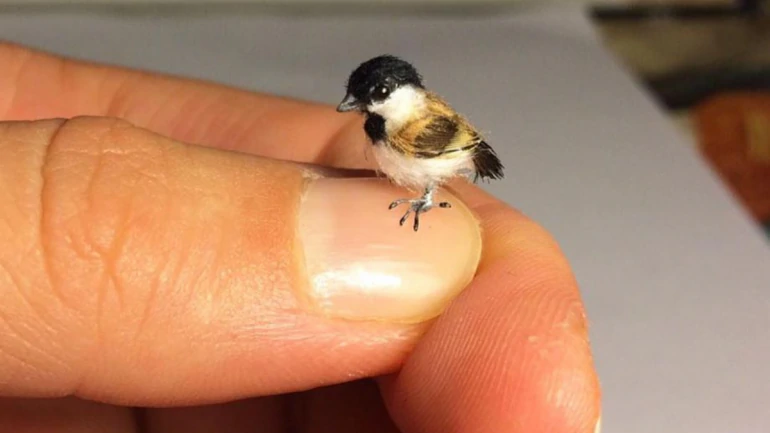
That's it for now though, it was a short week again.
Signing off for now...
Emi out :D


Hi Emily,
I hope you have a great week! I am attracted by your image! The two articles you choose are really informative!
Hey Emily! I like the first article you listed about primates and how they responded given their choices! I'm kind of still unclear just how exactly how observations were taken though. What kind of apparatus? Was the experiment split into two kinds of tests?
Hi Emily, I hope you are doing well! I am really interested in all things primates, so your first article has got me thinking about possibly doing research on chimpanzees (or maybe some other non human primate) instead of the Japanese Macaque; this is only because there isn't a lot of research that I am interested in for these guys (but I love them nonetheless). Great post!